
By- Pratyaksh Agarwal
Picture a classic crime scene: A criminal tosses a discarded weapon into a river, or leaves a getaway car abandoned in the pouring rain. For decades, lawbreakers thought water acted as the ultimate reset button—a way to wash away physical evidence completely.
They were wrong.
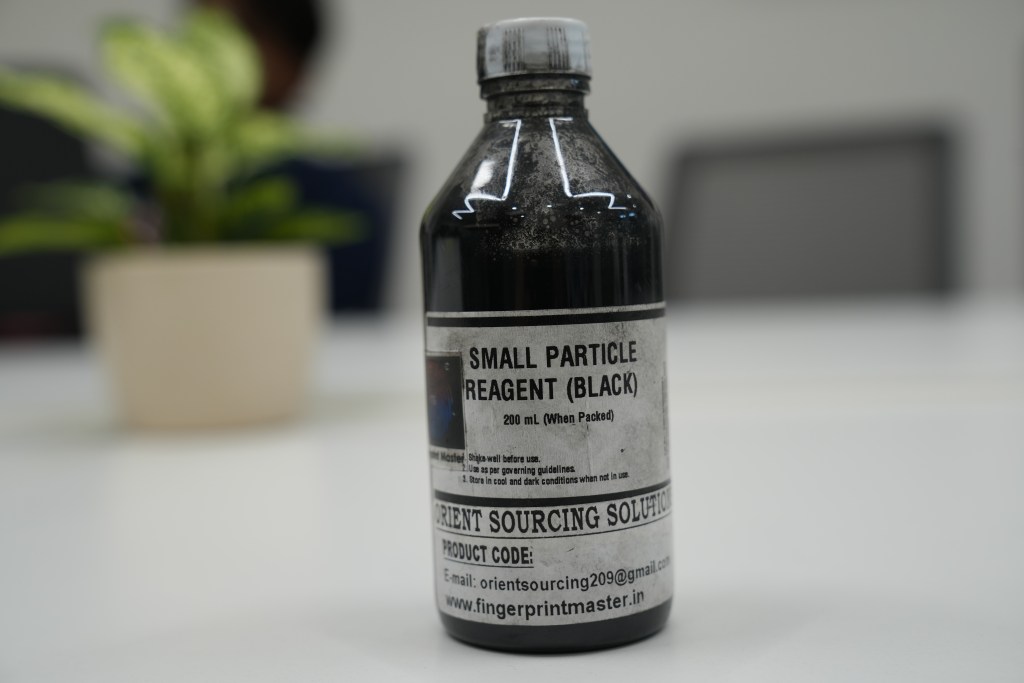
While moisture completely ruins conventional fingerprinting methods, forensic investigators possess a secret weapon for wet environments. They turn to Small Particle Reagent (SPR), a specialized technique that transforms underwater mysteries into open-and-shut cases.
The Science of Submerged Clues: What is SPR?
When a lake submerges evidence, or deliberate washing soak an item, traditional fingerprint powders turn into a clumpy, useless paste. SPR bypasses this issue entirely.
Unlike chemical development methods that must react with water-soluble components like amino acids, SPR relies on a purely physical mechanism. The solution targets the fatty and oily components of a fingerprint that water just can’t wash away. The reagent binds directly to these lipids, clinging to the ridges and making an invisible print vividly clear.
The Components of SPR:
How does a liquid suspension manage to paint a perfect picture of a fingerprint underwater? It all comes down to the formulation. A standard SPR mixture relies on three primary pillars:
Fine Particles: These inorganic solids provide the visual contrast. Investigators usually choose Molybdenum Disulfide (MoS2), though zinc-based compounds also work well.
The (Surfactants): Commercial detergents or specialized wetting agents like Kodak Photo-Flo or Triton X-100.
The Carrier Medium: Simple distilled water acts as the vehicle, delivering the particles to the target surface.
Why the Surfactant is a Game-Changer
Without a surfactant, water tension would cause the fine particles to clump together like wet flour. The surfactant lowers the surface tension of the water, allowing the mixture to flow smoothly and uniformly across a wet surface so the particles can neatly adhere to the oily ridges of the print.
Spray or Submerge? Choosing Your Forensic Weapon
Depending on the size and location of the evidence, CSIs generally deploy SPR using one of two application tactics:
1. The Spraying Method
- How it works: The investigator mists the solution directly onto the surface using a spray bottle.
- Best for: Large, unmovable, or fixed surfaces (like a car door in the rain, a windowpane, or a heavy safe).
2. The Dipping Method
- How it works: The investigator entirely submerges the item into a tray filled with the SPR solution.
- Best for: Small, portable items (like discarded firearms, knives, or cell phones).
Note: Regardless of the method, the investigator always applies a gentle rinse of distilled water afterward to wash away excess particles, leaving only the developed print behind.
A Palette of Proof: Picking the Right Color
Forensic scientists like options, which is why they utilize three distinct varieties of SPR to maximize contrast against any background:
| SPR Type | Best Used On | Why It Works |
| Black SPR | Light-colored surfaces | It provides stark, crisp contrast on clear glass or white plastics. |
| White SPR | Dark-colored surfaces | It makes prints pop against dark metals, black plastic bags, or dark glass bottles. |
| Fluorescent SPR | Complex or multicolored backgrounds | It glows under specialized forensic light sources, cutting through different patterns. |
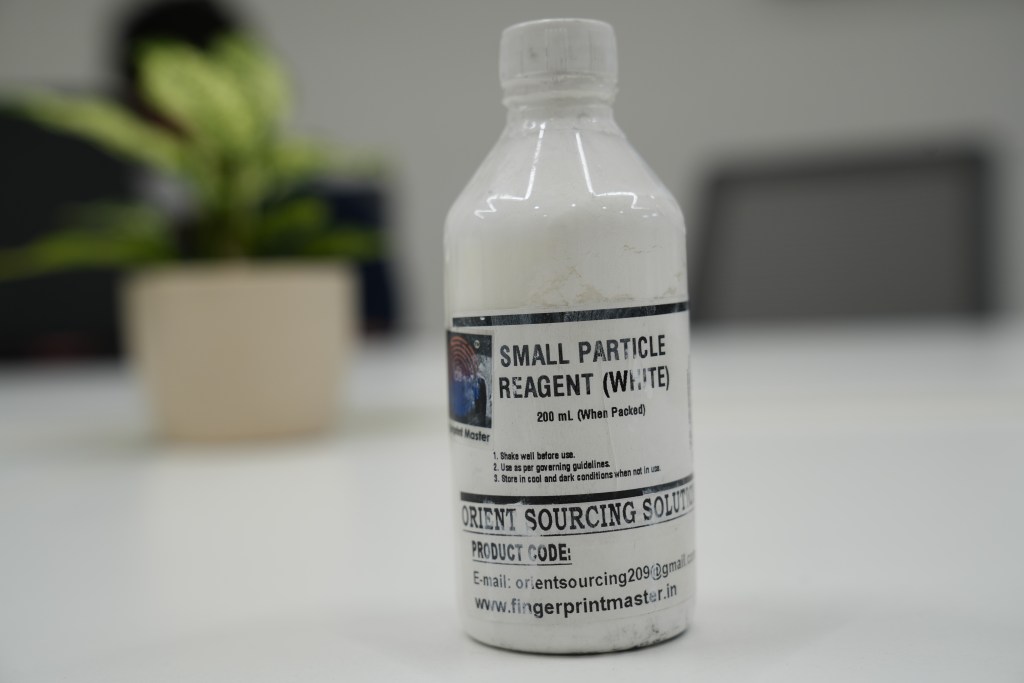

A Quick Lab Demonstration
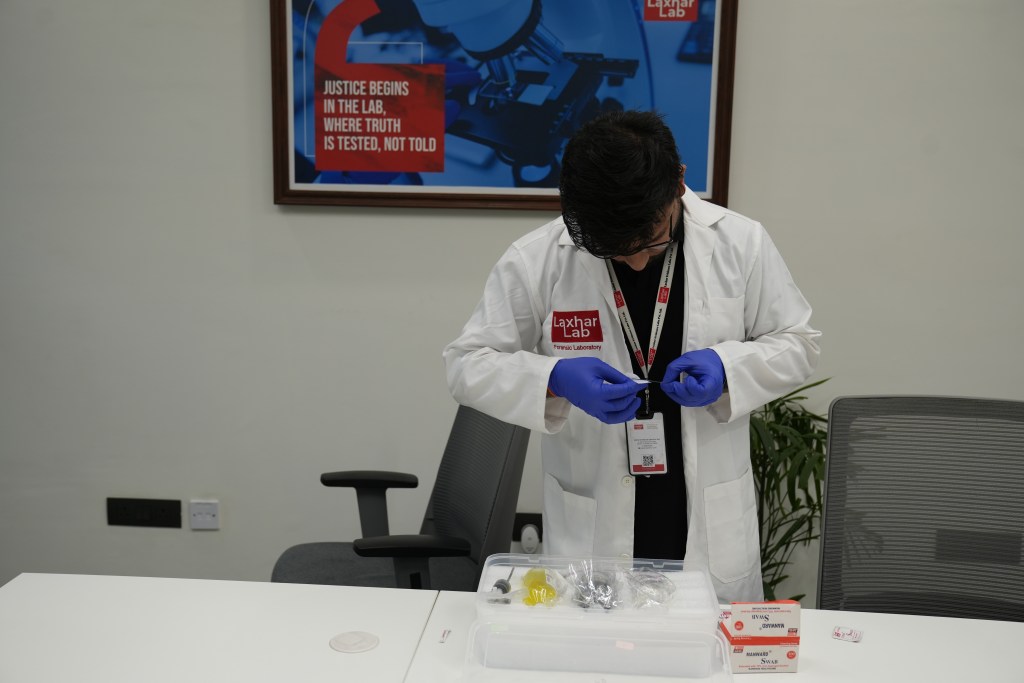
Want to see how this plays out under laboratory conditions? Here is how an investigator recovers a latent print from a wet glass slide step-by-step:
- Preparation: A clean glass slide is first wiped thoroughly to remove dust, dirt, and other contaminants.
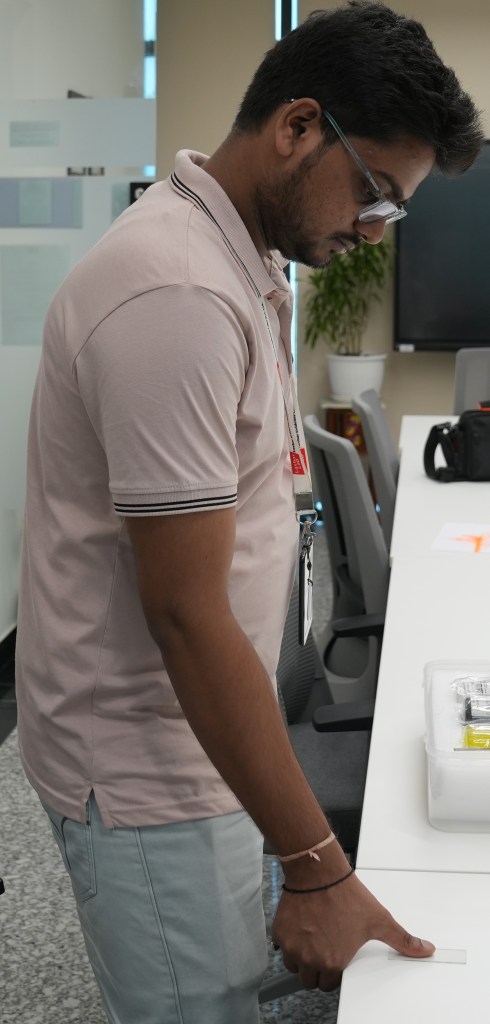
- Deposition: The donor’s finger is cleaned and then pressed onto the glass slide to leave a latent fingerprint.
- The Deep Dive: The glass slide is submerged in water for approximately 2–3 minutes to simulate wet evidence conditions.
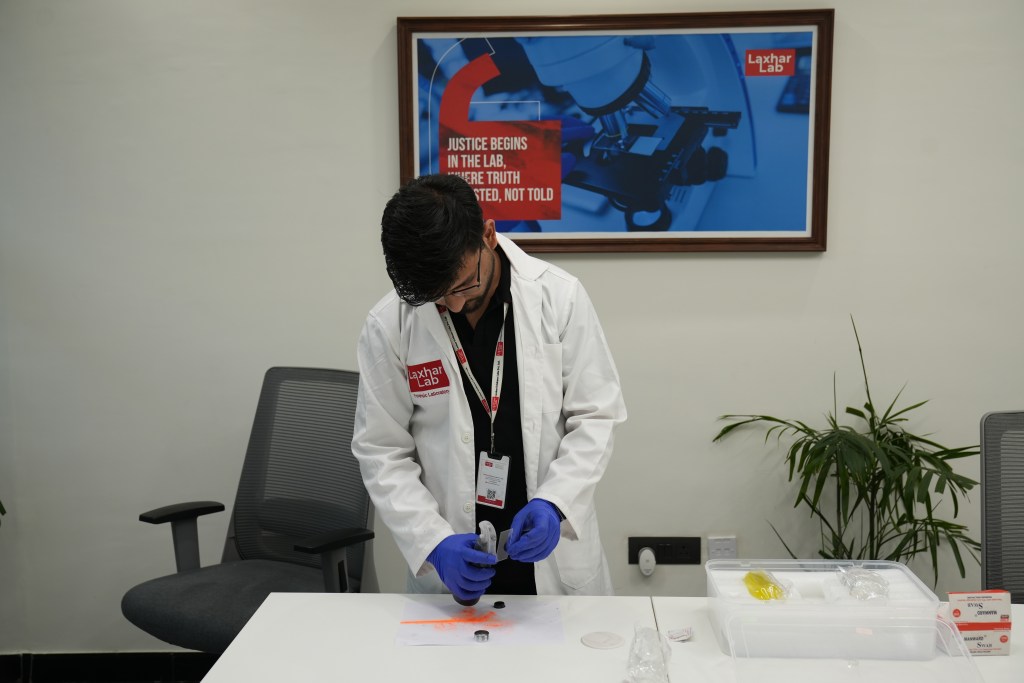
- The Reveal: After removal from the water, black SPR is sprayed onto the glass surface and allowed to remain for about one minute. The excess reagent is then carefully washed away using a gentle stream of water.
- Documentation: The developed fingerprint is allowed to air dry naturally. Once dry, the print can be photographed and examined for forensic analysis.



Why SPR Rules the Waterfront
Forensic kits maintain SPR as a staple for a reason. It offers a massive array of practical perks:
- Effective for Wet Surfaces: It excels exactly where standard powders and cyanoacrylate (superglue) fuming fails.
- Cost Effective: It requires inexpensive, readily available ingredients and works in minutes.
- Outdoor Scenarios: It perfectly tackles crime scenes that suffer from rain, flooding, or humidity.
- Documentation: The resulting prints remain highly stable, allowing investigators to easily photograph and present them in a courtroom.
- It Recovers History: SPR can even reveal “aged” prints that have sat underwater for extended periods.
The Environmental Factors Challenging SPR Success:
While SPR acts as a powerhouse in wet conditions, several real-world variables actively influence how well the reagent adheres to a submerged print:
- Water Current and Turbulence: Rushing rivers or crashing waves mechanically erode the oily ridge details over time. Stagnant water preserves prints far better than turbulent water.
- Contaminants and Pollution: Mud, silt, algae can corrode the evidence. These contaminants either hinders the SPR particles from developing the print or create background smudging that ruins the contrast.
- Submersion Time: Time always fights against the CSI. While SPR can recover aged prints, every extra day an object spends underwater shrinks the volume of remaining lipid residue.
- Surface Texture: Even among non-porous materials, perfectly smooth surfaces (like glass or smooth plastic) yield much sharper results than heavily textured metals or pitted plastics.